Wu Dawang’s return to Liu Lian’s compound after fifteen years
Serve the People!Wu Dawang’s return to Liu Lian’s compound after fifteen years is the final encounter between the former orderly and the woman with whom he had an affair. It turns the story’s promise of reunion into a scene of distance: Wu Dawang reaches the gate, but does not meet Liu Lian face to face; she sends him an offer of practical assistance, and he departs leaving her a wrapped object whose contents are not disclosed. The encounter is shaped by the intervening years and by the contrasts between the ambitious soldier he once was and the subdued middle-aged man who comes back.
The Man Who Returns
By the time Wu Dawang returns, he has entered middle age. The narrator presents the change through his appearance and bearing: time has left visible lines, his complexion has coarsened, and his expression carries a melancholy associated with failure. Social changes have bewildered and exhausted his generation, while the fighting spirit he once possessed has been worn away. The account does not narrate the intervening fifteen years of his family life in detail; instead, it makes the passage of time legible in Wu Dawang himself.
His circumstances have changed in ways that sharpen the significance of the visit. He knows through television and newspapers that the former Division Commander has become Provincial Commander-in-Chief, and that Liu Lian continues to share in her husband’s elevated position. His knowledge of Liu Lian is less direct, resting on fragments of gossip from former comrades. He therefore approaches the compound with awareness of her status but without certainty about how she will receive him.
A Return Shaped by Separation
The separation began with institutional upheaval, not a settled farewell. During a period of extended home leave, Wu Dawang learned that the Division Commander had volunteered his unit for a pilot army-streamlining scheme. The Division was to be disbanded, and the process disrupted military careers and household staffing alike. Because Wu Dawang was regarded favorably by the Commander and Liu Lian, arrangements were made for him to receive work in a city in his home province and for his family to move there, with employment for his wife as well.
At the same time, the household’s changing personnel and the Commander’s uncertain temper made Wu Dawang’s former post as orderly untenable. He was told not to return to the house or visit it unless pressing business required it. When he returned to barracks, he was relieved that the affair with Liu Lian remained undiscovered; the people who knew the secret were soon scattered by the Division’s formal demobilization. The story describes the affair as disappearing without trace, while Wu Dawang’s own departure closes the possibility of an immediate reunion. His later visit is thus a return across both personal distance and the institutional disappearance of the military world in which the relationship began.
The visit also reverses an earlier pattern in Wu Dawang’s life: his future had long been organized around promises of advancement and mobility. In his premarital pledge to Zhao Ezi, he promised to earn commendations, join the Party, and become an official, with the aim of moving his family from Wujiagou to a city. The pledge bound his marriage to a career timetable. After years of failure and anxious letters from his wife and father-in-law, he obtained a post in the Catering Squad; his promotion to Sergeant, Party membership, and commendations followed. Yet becoming an official remained out of reach, and the Division’s restructuring canceled promotions just as his prospects seemed to be changing. The city job and housing eventually arranged for his family were a practical outcome of the disbandment, not the culmination of the career path he had once promised to follow.
Finding the Gate
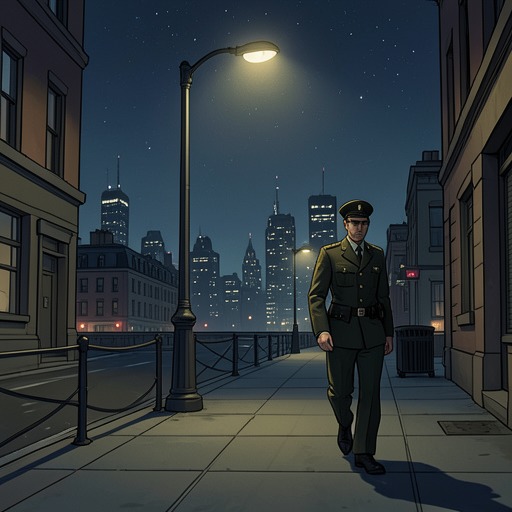
On a winter evening, Wu Dawang notices a teenage boy skating with other children on the frozen Jinshui River. He watches from a distance and then walks along the road toward the Commanders’ Compound. The approach is deliberate: he observes the main gate and its sentries for hours without trying to enter, then returns the following morning. His years in the army help him infer how to pass into such a compound, and he walks by the main sentries without challenge.
The compound’s scale and appearance mark a sharp contrast with the place he remembers. The gate is monumental, faced with imported stone and fitted with electric lights; sentries stand guard on raised platforms. The difference does not erase the resemblance within the grounds: behind railings are flower beds and vegetable plots, and the layout recalls the house and garden where Wu Dawang served as orderly fifteen years earlier. The familiar domestic pattern survives inside a more imposing setting, making the visit feel at once like a return and an entry into a different world.
At the gate of Number One, a sentry asks whom he has come to see. Wu Dawang identifies himself as the former orderly in Liu Lian’s household, explaining that her husband had been in charge of his Division fifteen years before. When asked whether the Commander and his wife know he is coming, Wu Dawang answers that otherwise he could not have passed the main gate. The exchange establishes his former connection to the household but does not secure him an invitation inside.
The Message and the Unanswered Gesture
The sentry telephones the house and conveys Wu Dawang’s name. After speaking with someone inside, he returns with a sealed envelope rather than an invitation. Liu Lian is having her hair done and cannot receive him, the sentry reports, but she has said that if Wu Dawang needs anything he should write it on the letter and she will arrange it. The explanation keeps the encounter formal and mediated: Liu Lian acknowledges his presence and offers help, yet the two do not meet.
Inside the envelope are two brief lines asking Wu Dawang to specify what assistance he needs, including an amount and address if he wants money. The note frames the possible relationship in practical terms, offering support while leaving no account of the past and no invitation to renew their intimacy. From outside the gate, Wu Dawang looks toward the front door, folds the letter, and places it back in its envelope. He then takes from inside his coat a stiff, rectangular object, about half an inch thick and just over a foot long, wrapped in red silk. He gives it to the sentry to pass to Liu Lian.
The story does not identify the object or explain what Wu Dawang intends it to mean. That withholding makes the exchange’s final gesture more consequential, not less: Liu Lian’s written offer is answered by a delivery rather than a spoken explanation or a face-to-face reunion. Wu Dawang turns away and disappears into the snow, leaving the object—and the meaning of his return—inside the compound.
An Ending Without Reunion
The encounter resolves the lovers’ long separation only as an encounter with separation itself. Liu Lian remains behind the gate, protected by the household’s procedures and status; Wu Dawang returns to the public side of the compound and leaves without pressing for entry. His visit does not reveal whether he seeks help, forgiveness, or merely acknowledgment, and the story does not disclose how Liu Lian responds to the object he leaves.
That restraint also recalls the unequal paths that brought them to this point. Wu Dawang’s earlier career depended on military rank, political favor, and the prospect of moving his family to the city; the Division’s dissolution abruptly redirected that future. Liu Lian, by contrast, remains associated with the Commander’s ascent. Fifteen years later, Wu Dawang can cross the compound’s outer gate, but the note and the sentry still mediate his access to her. The final image is therefore not a restoration of their former intimacy but a quiet parting: a folded letter, an unidentified gift, and Wu Dawang walking away without an answer.